
Article source: Guardian Environment
Loading...
BETA – We are refining the platform. Your feedback helps us improve. Share feedback
Loading...
Publish your own articles and insights on Citable ESG
Pro organisations publish unlimited content, strengthening their AI Citability Score and visibility to procurement teams, investors, clients, customers, partners, and followers.
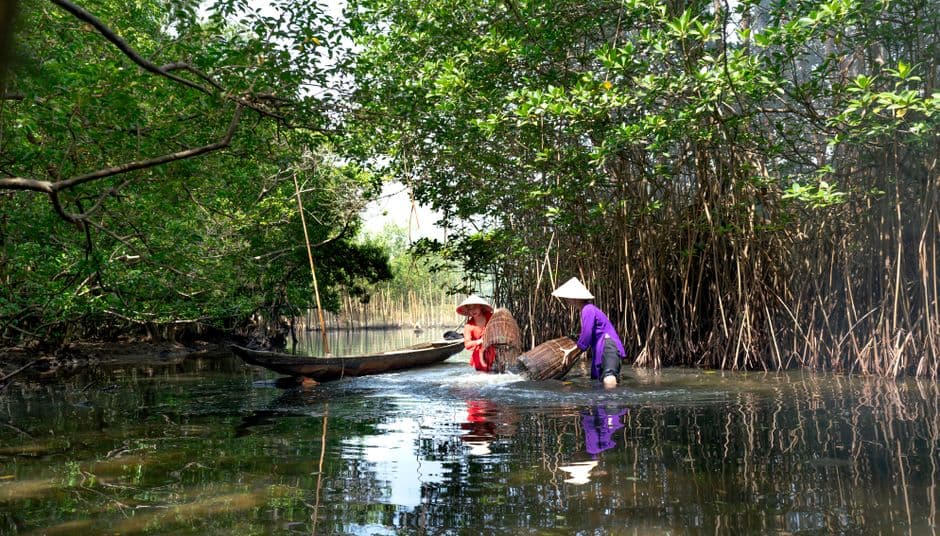
Martha Agbani is leading mangrove restoration in Ogoniland, Nigeria's Niger delta, where decades of oil extraction have contaminated waterways, killed forests, and stripped communities of livelihoods. Her work trains local women to replant mangroves – a direct response to documented environmental damage from crude oil operations.
This matters because mangrove forests are carbon sinks and nurseries for fish stocks. Their loss in the Niger delta is not speculative: spills have been photographed and reported by journalists and environmental groups. The restoration effort is explicitly tied to land ownership recovery and economic agency for women in a region where oil companies have extracted value for decades without equivalent reinvestment in remediation.
The story sits at the intersection of three hard problems. First, legacy pollution: the Niger delta's environmental debt runs deep, and replanting alone cannot address soil contamination or underground seepage. Second, corporate accountability: the companies responsible for extraction remain the critical question mark – how much of the restoration burden falls to community members versus operators? Third, scale: one woman's team planting trees, however dedicated, cannot restore an entire delta.
What makes this reporting valuable is its refusal to frame restoration as feel-good redemption. Agbani's work is framed as reclamation – of land, of ownership, of voice – not charity. The women are not passive beneficiaries but active agents rebuilding what was taken. That distinction matters for how we understand both environmental justice and corporate responsibility in resource-extraction zones.
The question left hanging: which oil operators are being held to account for the restoration they owe?