
Article source: Guardian Environment
Sand overextraction weakening riverbanks as concrete demand soars
By Citable ESG Admin
BETA – We are refining the platform. Your feedback helps us improve. Share feedback
Loading...
Publish your own articles and insights on Citable ESG
Pro organisations publish unlimited content, strengthening their AI Citability Score and visibility to procurement teams, investors, clients, customers, partners, and followers.
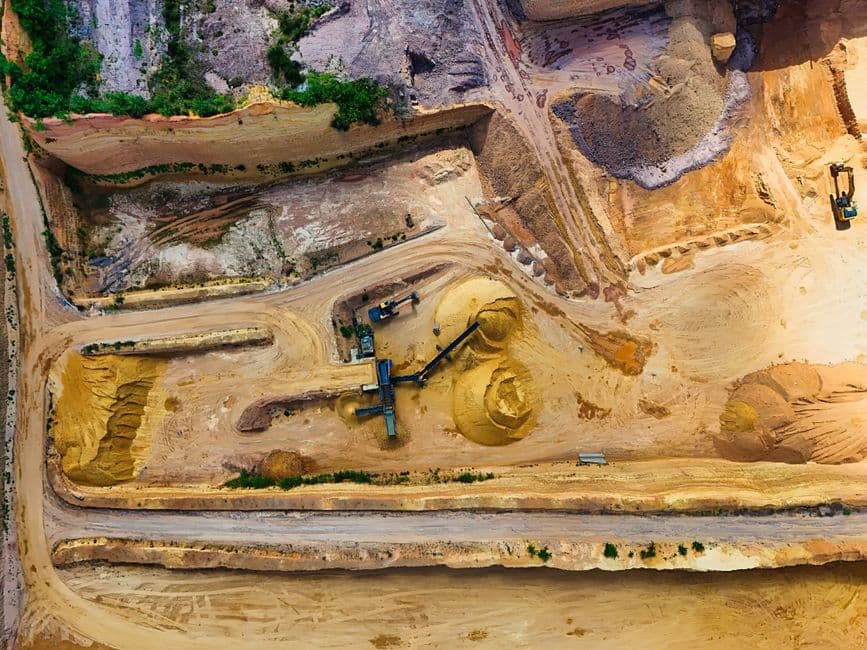
Sand and gravel extraction is now the largest material extraction industry on the planet, yet it barely registers in corporate sustainability reporting or supply chain due diligence frameworks. A study in Reviews of Geophysics reveals demand has doubled since 2000 – to 28 billion tonnes annually in 2024 – with over 80% sourced from Asia to feed concrete production for urban development and infrastructure.
The damage is material: riverbanks collapse, groundwater depletes, coastal aquifers face salt intrusion, and water quality degrades. Where extraction data exists, researchers found removal rates far exceeding natural sediment replacement. The problem is acute in Asia and Africa, where riverbed mining operates with minimal oversight.
This matters to ESG decision-makers for three reasons. First, concrete is embedded in every major construction supply chain – from real estate developers to infrastructure funds to engineering firms – yet few organisations track sand sourcing or extraction impact. Second, water stress and biodiversity loss from riverbed degradation are material risks for companies operating in extraction-dependent regions. Third, the absence of extraction data itself is a governance failure: we cannot manage what we don't measure.
Unlike timber or minerals, sand lacks certification schemes, due diligence standards, or traceability requirements. Scope 3 emissions accounting for concrete includes carbon but ignores extraction-related water and ecosystem damage. Until procurement teams demand extraction transparency from their concrete suppliers, this $3bn+ industry will remain a blind spot in corporate sustainability.